• Facebook
  • Twitter
  • Instagram
  • Youtube
  • Linkedin
  • English English English en
الصندوق الأردني للريادة
  • Home
  • About Us
    • Board Of Directors
    • Executive Management
    • Documents
  • What We Do
    • Deal Flow Creation
    • Equity Finance
      • Direct Investment
      • Fund of Funds
    • TOR: Incubator and Accelerator (Awarded)
      • IADP FAQs
    • TOR: Design, Develop & Manage Marketplace Platform (Awarded)
      • Platform FAQs
    • TOR EEDP (Awarded)
      • Frequently Asked Questions
  • Portfolio
    • Portfolio Funds
    • Portfolio Companies
  • News
  • Contact Us
    • Enquiry
    • Complaints
    • Direct Investments Enquiry
    • Fund of Funds Enquiry
  • Search
  • Menu
News

ISSF Invests in MSA Novo’s MENA Fund


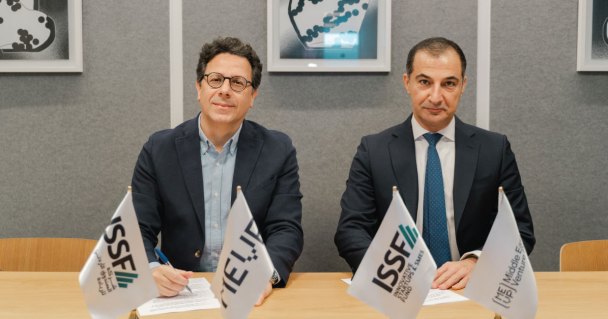
Amman, February 2024 — The Innovative Startups and SMEs Fund (ISSF), announces an investment in MSA Novo MENA-focused fund. MSA Novo is the emerging markets focused venture fund under MSA Capital, a global multi-stage investment firm. This investment underscores the commitment of the ISSF to empowering promising Jordanian startups to advance the local entrepreneurial landscape and the national economy at large.


Mohammed al Muhtaseb, CEO of ISSF, said, “We are very proud of our investment in MSA Novo, a global VC with a successful track record of scaling innovative startups. MSA has demonstrated a strong commitment to the Jordanian ecosystem, evident in both their investment thesis and their investment allocation for Jordan, which mobilizes additional capital to Jordanian startups thereby amplifying the ISSF’s investment. Through this strategic investment, our objective is not just to infuse vital equity capital but also to effectively open doors for Jordanian startups, providing them with accelerated access to global markets through the expertise of a key international player in the venture space.”


Ben Harburg, MSA Novo Managing Partner, commented, “ISSF was one of the first regional sovereign investors to support MSA’s vision of bringing global institutional investing to the Middle East venture space. In the process, MSA generated hundreds of jobs in Jordan. We are honored to again receive the trust of this critical institution tasked with the development of the Jordanian technology and entrepreneurship ecosystem and we look forward to robustly executing upon this mission in our new fund.”


This strategic investment unlocks new opportunities for Jordanian startups, providing them with the financing needed to scale and thrive in the competitive global market. The ISSF remains dedicated to championing innovation, creating jobs, and contributing to Jordan’s economic development.


About the Innovative Startups and SMEs Fund

The ISSF is a USD 98 million fund established in 2017 and registered in Jordan as a private shareholding company. The fund was established as a partnership between the Central Bank of Jordan with USD 48 million investment and USD 50 million from the World Bank. The ISSF is committed to facilitating funding for Jordanian early-stage startups and SMEs through investments in venture capital funds as well as direct investment in startups. The ISSF endeavors to foster a thriving and supportive entrepreneurial environment that enables promising local entrepreneurs to transform innovative projects into sustainable startups; generate jobs for Jordanian men and women; and prompt economic sectors that serve export markets by capitalizing on the creative and technical capabilities of entrepreneurs and management teams across Jordan.

About MSA Novo

MSA Novo is one of the only global venture capital firms systematically investing in emerging technology markets across multistage companies with a portfolio of 50+ companies across the Middle East, Latin America, Africa, and South Asia, investing in global sector leaders such as Tabby, Zid, NuBank, NIO, Cider, and Airbnb.


-End-


May 16, 2024/by Asmaa Al Khalidi
https://i0.wp.com/issfjo.com/wp-content/uploads/2024/05/ISSF-MSA-Novo-Copy-1-scaled.jpg?fit=2560%2C1707&ssl=1 1707 2560 Asmaa Al Khalidi https://issfjo.com/wp-content/uploads/2019/11/Asset-1-300x166.png Asmaa Al Khalidi2024-05-16 11:42:342024-05-19 06:52:14ISSF Invests in MSA Novo’s MENA Fund
News

ISSF Invests in Sadu Capital to Foster Innovation and Entrepreneurship in Jordan

[Amman, August 2023] – The Innovative Startups and SMEs Fund (ISSF) announced an investment in Sadu Capital’s early-stage fund, a venture capital fund focused on empowering technology startups and SMEs in Jordan and the region. As part of this collaboration, ISSF has committed an investment of $1,500,000 in Sadu Capital, further fulfilling its mission to fuel economic growth and technological advancement in Jordan.

“We are proud to partner with Sadu Capital and contribute to the development of Jordan’s vibrant entrepreneurial ecosystem,” Mohammed Al-Muhtaseb, CEO at ISSF. “Our investment in Sadu Capital aligns with our vision of catalyzing the growth of our ecosystem of innovative startups in Jordan, creating employment opportunities and driving economic growth.  Sadu’s interest in the Jordanian market is a testament to our unique Jordanian talent and to the well-positioned Jordanian startups.  Bringing in a dynamic fund like Sadu into the Jordanian market would add great value to the ecosystem as it provides Jordanian startups with accelerated access to the Saudi and GCC markets as well as access to finance throughout their journey.”

Sadu Capital’s fund focuses on investing in early-stage (Pre-Seed, Seed, and Series A stages) startups across various sectors, with a particular emphasis on B2B companies. Their investment strategy spans multiple geographies, including Jordan, KSA, UAE and Egypt.

“Jordan has played a pivotal role in the MENA entrepreneurial ecosystem as the producer of transformative startups and top talents who shape the industries they tackle. Partnering with ISSF we aim to scaling up promising startups to become regional champions.” Qusai A. AlSaif, Managing Director and CEO of Sadu Capital


This partnership between ISSF and Sadu Capital marks an exciting milestone in the advancement of Jordan’s startup ecosystem. By combining their extensive networks, resources, and expertise, the investment aims to accelerate the growth of startups and SMEs in the country. This alliance will not only provide financial support but also foster groundbreaking innovation, job creation, and contribute to the overall economic diversification of the region. Together, ISSF and Sadu Capital are positioned to drive change and establish Jordan as a thriving hub for entrepreneurial success in MENA.


-Ends-


About the Innovative Startups and SMEs Fund (ISSF):

The ISSF is a USD 98 million fund established in 2017 and registered in Jordan as a private shareholding company. The fund was established as a partnership between the Central Bank of Jordan with USD 48 million investment and USD 50 million from the World Bank. The ISSF is committed to facilitating funding for Jordanian early-stage startups and SMEs through investments in venture capital funds as well as direct investment in startups. The ISSF endeavors to foster a thriving and supportive entrepreneurial environment that enables promising local entrepreneurs to transform innovative projects into sustainable startups; generate jobs for Jordanian men and women; and prompt economic sectors that serve export markets by capitalizing on the creative and technical capabilities of entrepreneurs and management teams across Jordan.

About Sadu Venture Capital

Sadu Capital is a venture capital firm that invests in technology startups Sadu currently focuses on early-stage startups investments (Pre-Seed, Seed, and Series A stages) that are based in Saudi Arabia and the broader Middle East & North Africa region. Sadu Capital plays an active role in their investments and adds differentiated value to their portfolio companies.


May 16, 2024/by Asmaa Al Khalidi
https://i0.wp.com/issfjo.com/wp-content/uploads/2024/05/82-scaled.jpg?fit=2560%2C1707&ssl=1 1707 2560 Asmaa Al Khalidi https://issfjo.com/wp-content/uploads/2019/11/Asset-1-300x166.png Asmaa Al Khalidi2024-05-16 11:34:422024-05-19 06:54:15ISSF Invests in Sadu Capital to Foster Innovation and Entrepreneurship in Jordan
News

ISSF Invests USD 2 Million in Hambro Perks’ Oryx Fund

Read more
September 24, 2023/by Asmaa Al Khalidi
https://i0.wp.com/issfjo.com/wp-content/uploads/2023/09/133-2.jpg?fit=%2C&ssl=1 Asmaa Al Khalidi https://issfjo.com/wp-content/uploads/2019/11/Asset-1-300x166.png Asmaa Al Khalidi2023-09-24 09:16:302024-05-19 06:58:26ISSF Invests USD 2 Million in Hambro Perks' Oryx Fund
News

ISSF Invests USD 5 Million in Middle East Venture Fund IV

February 2023: The Innovative Startups and SMEs Fund (ISSF) – the largest investment fund of its kind in Jordan – announces an investment of USD 5 million in MEVF IV, a $150M Fund launched by Middle East Venture Partners (“MEVP”); MEVP is a regional MENA-focused venture capital firm with more than $300M of AUMs. The investment, which was completed in February, underscores the commitment of the ISSF to empowering promising Jordanian startups to advance the local entrepreneurial landscape and the national economy at large.


ISSF CEO, Mohammed Al Muhtaseb, commented:

“We are very proud and excited about our partnership and investment in MEVP, a well-established VC with proven track record in supporting and scaling up innovative startups and realizing returns for investors. MEVP demonstrated deep belief in the Jordanian ecosystem through investing in Jordanian companies in the past. The fund established a branch office in Amman to be closer to the Jordanian ecosystem as a result of their partnership with ISSF.  Through this partnership we hope to bring to the local ecosystem a strong regional player that can provide equity capital as well as accelerated access to markets for Jordanian start-ups.”


In turn, MEVP’s founder, chairman and co-CEO, Walid Hanna, stated:

“MEVP has always believed in the Jordanian startup ecosystem due to its distinctive talent and quality entrepreneurs. MEVP has been an early investor in this ecosystem and has witnessed numerous success stories such as Hyperpay and Al-tibbi. With the support of ISSF we are planning to empower more Jordanian startups to disrupt the MENA region and beyond, keeping in mind our commitment to ESG principles as well as high returns to our investors’ equity.”


– Ends –


About the Innovative Startups and SMEs Fund

The ISSF is a USD 98 million fund established in 2017 and registered in Jordan as a private shareholding company. The fund was established as a partnership between the Central Bank of Jordan with USD 48 million investment and USD 50 million from the World Bank. The ISSF is committed to facilitating funding for Jordanian early-stage startups and SMEs through investments in venture capital funds as well as direct investment in startups. The ISSF endeavors to foster a thriving and supportive entrepreneurial environment that enables promising local entrepreneurs to transform innovative projects into sustainable startups; generate jobs for Jordanian men and women; and prompt economic sectors that serve export markets by capitalizing on the creative and technical capabilities of entrepreneurs and management teams across Jordan.

For more information, please visit the website at www.issfjo.com


About Middle East Venture Partners (“MEVP”)

MEVP is one of the pioneer venture capital firms in the MENA region and currently manages four regional technology-focused venture capital funds with more than USD 300 million in assets under management and USD 1.6 billion in co-investments. To date, MEVP’s team, comprising 21 investment professionals, have invested in more than 60 portfolio companies across Levant, MENA, Sub-Saharan Africa, Pakistan, and Turkey.

More information can be found at https://www.mevp.com/

February 28, 2023/by Asmaa Al Khalidi
https://i0.wp.com/issfjo.com/wp-content/uploads/2023/02/PR-Image.jpg?fit=1200%2C627&ssl=1 627 1200 Asmaa Al Khalidi https://issfjo.com/wp-content/uploads/2019/11/Asset-1-300x166.png Asmaa Al Khalidi2023-02-28 10:39:362024-05-19 06:56:15ISSF Invests USD 5 Million in Middle East Venture Fund IV
Blog

No Time to Dine

Who would have thought that selling food would be scalable and that ‘amazonification’ would have something to do with it!


While there’s no specific definition for ‘amazonification’ – you can deduce that it describes the colossal impact that disruptors like Amazon have had on industries and consumer habits. With customer expectations at an all-time high and buying experiences radically transformed, businesses must remain relevant to survive.


Add COVID-driven changes to the mix; we truly are living in a ‘survival of the fittest’ era. Everything has become digitized, and the shift towards a delivery-only model has spurred consumers to seek out a virtual, convenient and quick buying journey to purchase essential goods like food and groceries.


Thus why cloud kitchens were born.


Cloud kitchens are centralized licensed commercial food production facilities ranging from one to dozens of restaurants renting spaces to prepare delivery-optimized menu items. There’s no physical outlet or dine-in option; they only accept delivery requests via apps, calls or online food aggregators.


As online food delivery market revenues are expected to reach USD 137,596 million worldwide by 20231, the increasingly popular cloud kitchen arena is set to benefit the most. Every restaurant – no matter its size – is trying to ride this trendsetting wave and move to online food delivery services as a means of sustaining operations.


If you’re thinking of launching your own food concept, here are four reasons why you should partner with a cloud kitchen:


  1. Market Opportunity

The ease of getting food delivered at a reasonable price and in record time has led to an increase in online orders, which is eating into the market share of traditional dine-in restaurants and replacing home cooking. Online food delivery revenues are expected to have a compound annual growth rate of 10.39 percent (2021-2025), resulting in a projected market volume of USD 401,391 million by 2025, while the number of users is expected to amount to over 2.6 million by 20252.


  1. Low Setup Costs

Partnering with a cloud kitchen requires less investment since you don’t need a prime location with high footfall. Also, since there’s no front-of-house, you don’t need fancy interiors and hospitable wait staff to ensure a great guest experience.


  1. Ease of Experiment

The cloud kitchen business model allows you to experiment with multiple concepts without much spending. You can operate numerous brands from a single kitchen using the same infrastructure and resources.


  1. Ease of Scaling

Scaling operations is much quicker and simpler when working with a cloud kitchen. Since the investment is significantly less, you can run more brands simultaneously.


Now that you have a better idea of the benefits of launching your own food concept, next up are the different cloud kitchen models:


  1. Independent Cloud Kitchen

This model has emerged as the most common, whereby a virtual restaurant operates without a physical storefront visible to customers, helping small businesses cut down on investment and specialize in a single cuisine. Food provided under this model can only be sold via online delivery apps.


  1. Multi-Brand Cloud Kitchen

Under this tech-specialized model, a sole mother brand operates through multiple cuisine-specific brands that identify and supply the most ordered dishes in an area with few competitors. Only online food orders are accepted, and delivery is fulfilled through an aggregator or the brand’s delivery staff.


  1. Hybrid Cloud Kitchen

This model is a partial cloud kitchen that allows customers to visit and see how the food is being prepared. However, these kitchens don’t offer dine-in services; customers can only pick up their orders or request them online.


  1. Shell Kitchen

With this aggregator-based model, restaurants use a particular delivery agent who owns the kitchen space in which they operate. Multiple restaurants can function under one roof, making it a good option for small food entrepreneurs to launch without a lump-sum investment since an empty kitchen space with basic infrastructure is provided. Additionally, the association with a single popular delivery app helps secure greater visibility, customer reach and brand awareness.


  1. Fully Stacked Kitchen

This takes the shell kitchen model one step further, whereby the delivery app owner offers brands a fully equipped kitchen; they just need to manage the food preparation while the delivery agent takes care of equipment supplies, order reception and food delivery. This model has a storefront that’s accessible to customers.


  1. Outsourced Cloud Kitchen

Most of the food preparation process is conducted in a centralized cloud kitchen, whose owner buys and stores raw materials, receives orders, and then pre-prepares dishes in a centralized kitchen. However, a partner restaurant gives the final touch, and the meals are again delivered through the cloud kitchen owner. This model benefits restaurants receiving huge orders regularly as the workload is shared with the cloud kitchen brand.


Now that you have a clearer understanding of which cloud kitchen model would best suit your food concept, keep in mind that digital marketing is crucial to your success, considering that your restaurant has no footfall or a storefront to attract customers. Make sure to invest in your social media presence and get on food delivery apps for an added push. Remember that the only point of contact between you and your customers is packaging, which can serve as a powerful and creative tool to appeal to more foodies.


Given the pace at which the restaurant industry is growing, joining a cloud kitchen is the next big thing. Not only do they make the dream of serving great food a reality, but they also make it accessible by eliminating the challenges of hefty rentals and investments.


By: Dina Toukan’s Senior Investment Analyst at ISSF

December 13, 2021/by Samia Awad
https://issfjo.com/wp-content/uploads/2019/11/Asset-1-300x166.png 0 0 Samia Awad https://issfjo.com/wp-content/uploads/2019/11/Asset-1-300x166.png Samia Awad2021-12-13 09:32:052021-12-14 07:57:17No Time to Dine
News

ISSF Holds Panel Discussion on Investing in Startups at ZINC

Amman, November 2021: Underscoring continuous efforts to support entrepreneurs across the Kingdom, the Innovative Startups and SMEs Fund (ISSF) – the largest investment fund of its kind in Jordan – organized a panel discussion titled ‘The World of Entrepreneurship with the ISSF’ at the Zain Innovation Platform (ZINC) at the King Hussein Business Park. The event was attended by ISSF General Manager Eng. Laith Al Qasem and ISSF Investment Director Hasan Al Shami, alongside a host of young entrepreneurs, startup owners and entrepreneurship enthusiasts.


During the session, Al Qasem showcased the stages of startup development and highlighted their specific requirements, while emphasizing the importance of successively passing through and meeting the various prerequisites of each in order to attract investors. Meanwhile, Al Shami addressed startup investments, noting that only a small percentage successfully raise venture capital funds globally and adding that the chances of attracting institutional investors increase after a startup reaches the revenue stage. Following the session, Al Qasem and Al Shami answered attendee questions on how to advance their companies and discussed the possibility of securing funding – whether from the ISSF itself or other funds, incubators and accelerators supported by the ISSF in Jordan.


“We are excited to conduct such discussions that allow us to interact with young entrepreneurs, explore their needs, empower them to develop their startups and prepare them for investment, in line with our mission to build and foster a robust local entrepreneurial ecosystem. We are proud of our creative youth, their promising capabilities and their innovative ideas, and look forward to organizing similar sessions in the future to outreach the largest number of young women and men and help their businesses thrive.”


The ISSF is registered as a Jordanian private shareholding company. The objective of the ISSF is to support and elevate Jordan’s entrepreneurial and innovation landscape by facilitating the establishment of new investment funds that serve the ecosystem; making direct investments in innovative, export-oriented and scalable local startups; as well as implementing initiatives that improve the capabilities of Jordanian entrepreneurs and startup teams through training, capacity building and targeted incubation and acceleration programs.


November 16, 2021/by Samia Awad
https://i0.wp.com/issfjo.com/wp-content/uploads/2021/06/ISSF-logo.png?fit=522%2C307&ssl=1 307 522 Samia Awad https://issfjo.com/wp-content/uploads/2019/11/Asset-1-300x166.png Samia Awad2021-11-16 11:05:022024-05-19 06:57:32ISSF Holds Panel Discussion on Investing in Startups at ZINC
Blog

The Art and Science in Business Valuation

Business valuation is a multifaceted process used to quantify the value of a business based on theoretical models and market reality – taking into consideration historical performance, future expectations, tangible assets, perceived risks, synergies, industry factors and comparable business assets.

Although some items can be determined using mathematical models, others are based on professional opinion. The science component encompasses statistical data, sales of comparable companies and analysis of historical performance. On the other hand, the art component comprises expert opinions, business forecasts, risk assessments and expectations of future returns.

While anyone can learn the science, a seasoned expert stands out for having obtained other key skills required for conducting a quality business valuation.

Valuation for businesses is a difficult and complex process, and valuation for closely-held and private businesses is even more challenging. These complications are generally created by the inconsistency, unavailability or inability to validate information on these businesses; the lack of external reporting requirements and oversight; and the desire to minimize the personal tax burden of owners.

The key valuation drivers are (1) business transactions, (2) taxes, (3) financial reporting, (4) litigation, (5) shareholder transactions and (6) government mandates.

Summary of a Valuation Process


Applying traditional valuation techniques in developing markets is more arduous, as many of the underlying assumptions (such as market efficiency, etc.) may not be applicable.

There is also very little empirical evidence to support valuation conclusions reached for companies in developing countries. Therefore, thorough research is necessary for making adjustments to account for these differences.

Four Final Thoughts


Sources:

Public information

IACVA publications and materials

Best practices for business valuation materials


November 8, 2021/by Mhamad
https://issfjo.com/wp-content/uploads/2019/11/Asset-1-300x166.png 0 0 Mhamad https://issfjo.com/wp-content/uploads/2019/11/Asset-1-300x166.png Mhamad2021-11-08 13:16:532021-11-08 13:30:41The Art and Science in Business Valuation
News

Innovative Startups and SMEs Fund Invests USD 150,000 in NEXT Renewable Energy Company

Amman, October 2021: The Innovative Startups and SMEs Fund (ISSF) – the largest investment fund of its kind in Jordan – has completed a direct investment of USD 150,000 in NEXT Renewable Energy Company; a Jordan-based provider of specialized solar thermal (ST) and photovoltaic (PV) solutions. NEXT extends solar-dependent designs, fuel-saving solutions, desalination systems and heavy fuel oil (HFO) tank heating for both commercial and industrial clients across the hotel, hospital, textile and food industries.   


The investment aligns with the Innovative Future Initiative, which the ISSF launched to support startups and SMEs affected by the COVID-19 pandemic in Jordan. Organized in coordination with the World Bank, the initiative has allocated USD 7.5 million to empower these companies to overcome the challenges imposed by the global health crisis.


“Amidst the COVID-19 pandemic, we have been placing added focus on direct investments so as to enable startups and SMEs to not only endure, but also prosper. Through this investment, the ISSF is helping NEXT to recover and reach its full technical and operational potentials, consequently contributing to the revival of the local entrepreneurial ecosystem and positively impacting the national economy as a whole,” commented ISSF CEO, Laith Al Qasem.


In turn, NEXT Chariman, Hani Rabie, stated, “The ISSF was very prompt and steadfast in responding to our pressing business needs. Following a standstill of over 14 months, we were awarded our first project since the onset of the pandemic. This investment came at an opportune time, enabling us to mobilize our resources and cover the expenses required for closing several pending projects throughout the region.”


The ISSF is registered as a Jordanian private shareholding company. The objective of the ISSF is to support and elevate Jordan’s entrepreneurial and innovation landscape by facilitating the establishment of new investment funds that serve the ecosystem; making direct investments in innovative, export-oriented and scalable local startups; as well as implementing initiatives that improve the capabilities of Jordanian entrepreneurs and startup teams through training, capacity building and targeted incubation and acceleration programs.

November 7, 2021/by Mhamad
https://issfjo.com/wp-content/uploads/2019/11/Asset-1-300x166.png 0 0 Mhamad https://issfjo.com/wp-content/uploads/2019/11/Asset-1-300x166.png Mhamad2021-11-07 09:18:222021-11-07 09:19:27Innovative Startups and SMEs Fund Invests USD 150,000 in NEXT Renewable Energy Company
News

Innovative Startups and SMEs Fund Grants USD 250,000 Fund to iPARK@Aqaba Entrepreneurship Program

Amman, October 2021: As part of its Incubator and Accelerator Development Program (IADP), the Innovative Startups and SMEs Fund (ISSF) – the largest investment fund of its kind in Jordan – has granted a USD 250,000 fund to the iPARK@Aqaba Entrepreneurship Program, emphasizing efforts to support early-stage startups and SMEs throughout the Kingdom. iPARK@Aqaba is the first business incubator in the city and seeks to empower aspiring entrepreneurs within the tourism, logistics, entertainment and services sectors.

Under its multiple tracks – which encompass structured awareness and capacity building programs, incubation services and networking opportunities – the iPARK@Aqaba Entrepreneurship Program is expected to support 98 ideas and startups, as well as generate 250 jobs, subsequently capitalizing on the entrepreneurial potential of Aqaba, advancing the local ecosystem and driving economic growth.

“At the ISSF, we seek to develop the entrepreneurial ecosystem through funding high quality investment readiness programs, incubators and accelerators targeting youth and women entrepreneurs across all governorates . By funding the iPARK@Aqaba Entrepreneurship Program, we are providing young female and male entrepreneurs with a valuable opportunity to establish and nurture their innovative and commercially viable startups. This promising program contributes to fostering innovation, developing a robust entrepreneurial landscape, creating jobs and eventually furthering economic advancement,” commented ISSF Programs Manager, Dr. Shadi Al-Khamayseh.

In turn, iPARK Incubation Director, Serene Duwayri, added, “The iPARK@Aqaba Entrepreneurship Program was designed to target the specific requirements of the local community, create value-added jobs for youth and enhance the growth prospect and integration of the national economy. We aim to develop a dynamic entrepreneurial ecosystem in Aqaba that establishes a sustainable culture of entrepreneurship and startups with clear market demands and potential partnerships. We firmly believe that the dynamic resulting from this program will continue to flourish, attract support organizations from other cities and hence become commercially viable beyond the timeline of the program.”

The ISSF is registered as a Jordanian private shareholding company. The objective of the ISSF is to support and elevate Jordan’s entrepreneurial and innovation landscape by facilitating the establishment of new investment funds that serve the ecosystem; making direct investments in innovative, export-oriented and scalable local startups; as well as implementing initiatives that improve the capabilities of Jordanian entrepreneurs and startup teams through training, capacity building and targeted incubation and acceleration programs.

October 20, 2021/by Mhamad
https://issfjo.com/wp-content/uploads/2019/11/Asset-1-300x166.png 0 0 Mhamad https://issfjo.com/wp-content/uploads/2019/11/Asset-1-300x166.png Mhamad2021-10-20 13:58:512021-10-20 18:54:06Innovative Startups and SMEs Fund Grants USD 250,000 Fund to iPARK@Aqaba Entrepreneurship Program
Blog

The Rich Boys Club

The Rich Boys Club

Entrepreneurship has always been an exclusive club, and when I joined the investment world – what feels like a few lifetimes ago – my goal was to make this club more inclusive and empower the non-ivy-league camp.

Funnily enough, over 90% of the investments I made have been with those who are quite privileged; i.e. ‘the rich boys club’.

Investors love underdogs, so why is capital chasing the rich?

One would assume that this has to do with education, exposure and founder networks. However, reflecting on this notion, it actually boils down to one thing; rich boys can afford to fail.

To better understand such a socioeconomic dilemma, we first need to look into the commercial value chain and the risk profile, stage by stage, for each stage. We need to understand how investors think.

Working as an investor, I ultimately have one job; managing risks.

Your success rate goes higher as you move up in the value chain.

The success rate of the idea stage falls, at best, between 5% and 7%*1. Yes, you heard that right; statistically, for every 100 novel ideas out there, only five to seven will see the light. Most institutional investors don’t get involved this stage given the high level of risk. Therefore, this stage is typically developmental and not commercially driven.

Statistically, 77%*2 of financing for entrepreneurs is sourced by savings and only .05%*2 of startups raise venture capital funds – the rest are mainly friends and family.

In other words, unless you have a hefty bank account or parents with deep pockets, you are unlikely to get the chance to finance and explore different entrepreneurial ideas because you can’t afford to fail.

Success ratio, however, goes up to between 10% and 30%*3 after a business venture hits revenue stage, and your chances become much higher for onboarding institutional investors.

So, the one-million-dollar hack is to move to revenue stage as quickly and economically as possible. And, if you happen to solve a problem at scale, investors will run after you.

Promoting Failure

It’s interesting how we live in a world where failure is frowned upon in the venture space, despite the fact that we regularly experience failure as we go about our everyday lives – whether in jobs, projects, relationships, etc.

Many successful entrepreneurs I met have at least tried and failed once. One good friend jokes about how his parents covered the costs of his first three ventures to keep him busy, and he only made it big on his fourth.

Failing obviously makes us better; you won’t get to know all the answers, but you will learn what not to do (even fund managers favor second-time founders as part of their selection criteria).

Besides promoting failure, as ecosystem builders, we also need to improve the statistics so as to allow more investors to step in – the very low 5% to 7% at pre-seed success rate just doesn’t look too great.

So, what can we do?

Venture Building

42%*4 of startups fail due to lack of market need.

Unlike typical accelerators and incubators, which work with entrepreneurs to develop their business ideas and ventures, a venture builder is a group of wise humans who identify market gaps first, then onboard founders in order to build the product. They also help ventures reach to the sales and revenue stages as soon as possible and prepare them for the next financing round.

Founders at venture studios are paid for their time.

Venture building is on the rise and, unlike most accelerators and incubators, venture builders can be commercially viable, and more private money is being poured into this investment vertical.

I’ll probably elaborate more about venture building and how ecosystem builders can accelerate this vertical in another article. But, for now, if you have a good idea and no wealthy parents; what can you do?

Fail as Quickly and Inexpensively as Possible

  • Rule number one; understand the commercial value chain.
  • Articulate your idea on paper; your thoughts only matter when they are jotted down.
  • Understand that business is more than a product; there are plenty of materials online like Y Combinator*5 – which have a rich library (enclosed below) – so prepare, prepare, prepare.
  • Study your market well; investors only partner with founders who know their market better than them.
  • Sell before you make; build a Minimal Mockup Product and go to market as soon as possible. If you are in hardware, build a prototype; if you are in software, build a landing page. By mockup, you only create what allows you to approach customers and then pre-sell to customers to finance product building. If this approach is good enough for Elon Musk*6 – it’s good enough for you. The idea is to generate revenue and reduce commercial risk as soon as possible.
  • Fail as quickly and cheaply as possible; don’t spend more than a few hundred dollars to build your Minimum Mockup Product. If you are unable to pre-sell your product, then it probably has no market fit and is not solving a real problem. If that’s the case, drop and repeat.
  • If you are in Jordan, reach out to Oasis500*7 and Flat6labs*8 – both incubators cover the idea stage.
  • And last, but definitely not least, never give up!


Source1: https://www.wipo.int/edocs/mdocs/innovation/en/wipo_ifia_kul_96/wipo_ifia_kul_96_1.doc

Source 2: https://www.fundera.com/resources/startup-funding-statistics

Source: 3: https://www.entrepreneur.com/article/288769

Source 4: https://www.cbinsights.com/research/startup-failure-post-mortem/?utm_campaign=cbi-social&utm_content=173297792&utm_medium=social&utm_source=linkedin&hss_channel=lcp-1140722

Source 5: https://www.ycombinator.com/library?categories=Becoming%20a%20Founder

Source 6: https://www.forbes.com/sites/jlim/2016/05/25/sell-before-you-make-it/?sh=82fc08b52d82

Source 7: https://oasis500.com/en/

Source 8: https://flat6labs.com/Location/jordan/

September 22, 2021/by Mhamad
https://issfjo.com/wp-content/uploads/2019/11/Asset-1-300x166.png 0 0 Mhamad https://issfjo.com/wp-content/uploads/2019/11/Asset-1-300x166.png Mhamad2021-09-22 07:47:012021-09-22 11:56:32The Rich Boys Club
Page 2 of 512345

Pages

  • Blog
  • Board Of Directors
  • Complaints
  • Contact
  • Deal Flow Creation
  • Deal Flow Creation Enquiry
  • Direct Investment
  • Do You have an Investor
  • Documents
  • Enquiry
  • Equity Finance
  • Executive Management
  • Frequently Asked Questions
  • Fund of Funds
  • Fund of Funds
  • Home
  • ISSF TORs Q&A
  • Job Openings
  • Media
  • News
  • News
  • Newsletter signup page
  • Operations, Administration and HR Manager-Vacancy
  • Partners
  • Portfolio Companies
  • Portfolio Funds
  • Programs Manager
  • Programs Professionals
  • Sign up
  • TOR EEDP (Awarded)
  • TOR: Design, Develop & Manage Marketplace Platform (Awarded)
  • TOR: Incubator and Accelerator (Awarded)
  • World Bank Safeguard Policies OP

Categories

  • Blog
  • News

Archive

  • April 2025
  • January 2025
  • November 2024
  • October 2024
  • August 2024
  • July 2024
  • June 2024
  • May 2024
  • September 2023
  • February 2023
  • December 2021
  • November 2021
  • October 2021
  • September 2021
  • August 2021
  • July 2021
  • June 2021
  • May 2021
  • March 2021
  • February 2020
  • November 2019
  • August 2019
  • September 2018

Sign up for our newsletter

All rights reserved Innovative Startups & SMES Fund 2020 ©
  • Facebook
  • Twitter
  • Instagram
  • Youtube
  • Linkedin
Scroll to top